

Insurance News:
Are Insurers Turning Their Back on the UK Construction Insurance Market?
If you’re placing construction risks in 2026, you may be observing qualitative shifts in construction insurance market conditions in the UK which are having a direct spillover effect on insurers’ risk appetite.
The reality is that the market took a sharp turn from its longest recorded soft market, which ran through 2018, hardening between 2019 and 2021.
Generally, a hard market in construction insurance results in higher premiums, tighter underwriting standards and reduced capacity from carriers.
Contractors face restricted coverage limits and higher costs for builder’s risk and professional liability, particularly for high-risk segments like high-rise residential, complex infrastructure and bespoke facade designs.
However, what you’re dealing with now isn’t a repeat of that hard market, or a pricing correction, it’s a selective withdrawal.
Insurers are narrowing their appetite, tightening coverage terms, or completely withdrawing from specific segments of the construction insurance market altogether.
Understanding these changes can help you determine which markets are worth approaching, how you should structure submissions and where specialist capacity exists when standard markets fall short.
This report takes an honest look at the current state of the construction insurance market in the UK in 2026 and delves into:
- The factors driving insurer caution
- The most affected lines and risk types
- What happens when your usual markets say no
A Closer Look at The Construction Insurance Market in 2026
The construction insurance market has been under pressure since the Grenfell Tower fire in 2017, but the current environment is the product of a more recent set of events.
A series of events starting in 2022 like natural catastrophes, social inflation in the US liability market and higher capital requirements under Solvency II successor frameworks are reshaping the current insurer appetite.
The cost implications of these events have a direct knock-on effect on insurers who are now offering less capacity and accepting fewer risks.
Here are three underlying pressures that are currently driving the shift in insurer appetite in the UK:
The Building Safety Act 2022 and residential risk
The Building Safety Act 2022 has created genuine regulatory uncertainty for insurers writing coverage on residential projects, particularly anything covering cladding, fire safety, or buildings over 18 metres.
The Act defines a ‘higher-risk building’ as one that is at least 18 metres in height or 7 storeys.
Insurers are responding to this uncertainty by restricting underwriting on these risks. Case law is also exercising the same level of caution.
An example is the Martlet Homes vs Mulalley & Co case.
In this case, Martlet Homes, a housing association sued construction company Mulalley & Co Ltd for the total replacement value of £8 million for installing an external wall insulation (EWI) cladding that was found to be combustible and posed a serious fire risk.
This case sets the legal and financial precedent for how large cladding-related claims can be and gives insurers a benchmark for pricing this type of risk.
Insurers see a wider door for claims through the Act and know that confirmation courts will award large sums through that door and have become more cautious about cladding-related and high-rise residential risk.
Contractor insolvency
Construction insolvencies reached a high of 3,931 in 2025, a slight drop from 4,032 in 2024, but still 21.5% above pre-pandemic levels.
This sustained period of business failures is resulting in substantial claims activity, resetting loss ratios for many insurers and prompting portfolio reviews.
The wider claims environment
The general claims environment in construction is deteriorating. Supply chain disruption is pushing contract values beyond original estimates, triggering underinsurance issues that inflate claims.
Additionally, litigation around defective work is becoming more common as building owners take a firm stance at exercising their rights within the defined framework of the Building Safety Act.
UK Construction Insurance Capacity:
Why It’s Tightening
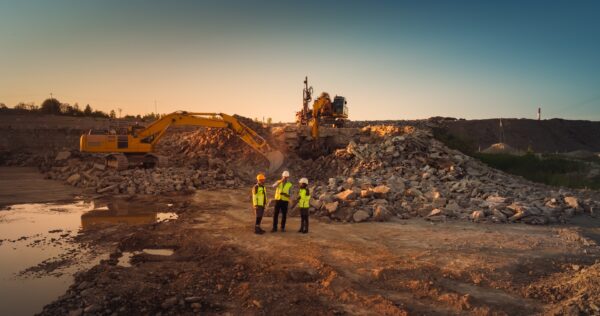
The cumulative pressure coming from the high construction insolvency rate, a deteriorating claims environment and the regulatory shifts introduced by the Building Safety Act 2022 is triggering a specific set of insurer behaviours.
Within the most affected segments, insurer appetite is tightening in four specific ways:
1. Restricted classes of business:
Several major insurers have exited specific segments like high-rise residential construction, cladding remediation, RAAC-affected buildings, or they have applied conditions and exclusions that make coverage unworkable.
Insurers are more cautious when offering coverage to buildings containing RAAC, which can lead to higher premiums or denial of coverage altogether.
Where a building does contain RAAC, insurers require that this detail be disclosed as a material fact to make for a fair presentation of risk.
Moreover, the market for residential construction over 18 metres has contracted and brokers are seeing construction insurance declined outright on projects that would have secured terms 18 months ago.
2. Higher minimum information requirements:
Insurers who still write construction business now require more information upfront before they provide a meaningful indication.
Projects that could once be quoted on a one-page submission now require full contract documentation, contractor financials, fire strategy reports, and extensive project programme details.
On higher-risk building work, insurers require competency declarations, Gateway 2 submission records, design change registers, and confirmation of which Principal Designer scope was discharged on previous projects.
Instances where this information cannot be presented premiums are increased, exclusions widen or insurers decline cover altogether.
3. Reduced limits and increased retentions:
Even where appetite exists, terms have changed. Limits are lower, retentions are higher and coverage conditions are more restrictive on affected risk types.
All the behaviours are typical of a hard market construction cycle. If you’ve placed a risk on broad terms 18 months ago, you may find that the same risk is now only available on narrower terms, or for a higher premium.
4. Withdrawal of long-standing participants
Several insurers who have written construction insurance for years are reassessing their participation in the affected segments.
Some insurers have exited specific lines entirely; others are taking a more selective approach, only writing risks at the very top end of the quality spectrum.
The Most Affected Lines and Risk Types
Not all construction insurance is constrained. But there are segments that are being tightened – they include:
- High rise residential construction and refurbishment, particularly projects involving cladding systems or higher-risk buildings under the BSA.
- Cladding remediation: where the exposure is both significant and hard to define.
- RAAC-affected buildings – where most standard building insurance policies aren’t designed to cover wear and tear or construction defects, leaving genuine ambiguity over how claims involving RAAC failure will be treated.
- Design and build contracts where liability for both construction defects and design failures sits with the contractor.
- Latent defects insurance on complex or non-standard structures
- Performance bonds for financially stretched contractors – a live concern given elevated insolvency levels across the sector.
The common thread throughout all of these segments is uncertainty or risks where the claims profile is inherently harder to predict, or where the regulatory environment creates exposure that’s difficult to define.
Insurers without specialist construction insurance expertise manage that uncertainty by restricting their participation rather than pricing it properly.
This is where we come in at Exance. Our specialist Latent Defects (LDI) Insurance capacity comes in, built specifically for the harder-to-place risk in residential and commercial developments.
Rather than stepping back from complexity, we provide A+ rated capacity and flexible, custom risk solutions tailored to the specific requirements of the risk in front of them.
Knowing which lines are under pressure is only half the picture. The real question that you may want answered is what you do when the general market pulls back.
What Happens When Your Usual Markets Say No
The practical problem with a constricting segment is time.
Approaching standard markets, receiving negative responses and then finding an alternative route costs you time you may not have and every week of delay costs your clients too.
The more efficient approach is to understand your risk’s characteristics before you approach markets and direct it to the right market first.
For construction risks with the characteristics described above starting with a specialist MGA rather than standard markets isn’t giving up, it’s making the smart choice.
It’s a rational allocation of placement effort.
Specialist MGAs have developed specific expertise in the risk types that standard markets have pulled back from.
They hold capacity from insurers who understand these risks, and they bring the underwriting knowledge to assess them properly rather than applying blunt exclusions.
On the current market:
The brokers who are most effective at managing the tightening market are those who’ve invested in understanding and exploring their specialist options early, before facing a deadline with a declined risk.
Solution: At Exance – we offer a stable; specialist route to construction capacity. We’re your partner for complex risks.
Are you placing a high-rise residential, cladding remediation, or RAAC-affected risk? Our specialist Latent Defect Insurance (LDI) capacity is built for residential and commercial developments that standard markets won’t touch. Learn more.
The Role of Specialist MGAs in a Tightening Market
A Managing General Agent (MGA) like Exance operates with binding authority from insurers who have specifically allocated capacity for specialist construction risks.
When a standard insurer steps back, we step in – not as a last resort, but as the appropriate first choice for the risk type.
The practical difference for brokers is access.
Where a standard market might offer a conditional or restricted quote, or no quote at all, we can offer terms that reflect the actual characteristics of what’s been submitted.
The other practical difference is underwriting dialogue.
Standard insurers apply automated risk scoring or broad underwriting guidelines that don’t accommodate complexity well.
Specialist MGAs employ underwriters who engage with complex submissions and ask the right questions, understand the questions and make an informed decisioned.
Exance: Built for the Risks Others Won’t Touch
Our solutions provide construction insurance capacity that brokers can rely on when the standard market doesn’t serve a risk.
Our underwriters bring deep experience in construction risk beyond, not as a subset of a broader commercial line’s portfolio, but as our specific professional focus.
We write Contractors All Risk Insurance, Latent Defects Insurance, Surety Bonds, Insurance-Backed Guarantees and specialise in construction and financial lines.
We work with brokers to structure submissions for complex risks, and we maintain appetite in lines where many standard insurers have pulled back.
For brokers whose clients face constraints, restricted terms, or poor market response on construction risks, it may be worth your while to reach out to us early in the process.
We can tell you quickly whether a risk sits within our appetite – and if it does, we’ll engage with the submission properly.
Don’t let a standard market decline be the end of the conversation. We hold dedicated capacity across CAR, Latent Defects Insurance and Surety Bonds for Construction risks others are withdrawing from.
Submit your risk and get a real answer within minutes. Get an indicative quote now.
Related articles